An amplifier adjustment is the process of adjusting the settings on an audio or power amplifier to get it to a desired level of performance. This may involve setting levels such as volume, tone, gain and other features that can be adjusted through knobs or switches on the device. Adjusting these parameters will affect how much output signal is generated from an input source.
The steps required for making any type of adjustment will vary depending upon the specific model and manufacturer so make sure you have access to user manuals before attempting any changes. It’s also important to note that different types of amplifiers require different methods for adjusting them properly; some may need special test equipment while others can be done with just basic tools like a multimeter or oscilloscope.
Amplifier Tuning Settings How To – Gain, Crossovers, Bass Boost
Amplifier adjustment is an essential part of any audio setup, as it can make a significant difference in sound quality. By adjusting the amplitude or ‘gain’ on your amplifier – whether you are using a dedicated amplifier or one that comes built-in with your speakers – you can ensure that your audio output is being amplified to its fullest potential. Additionally, by balancing the EQ settings on the amp and tweaking the different frequency bands accordingly, you can customize the sound to fit perfectly into your listening environment.
How to Adjust Car Amplifier Settings
Adjusting the settings on your car amplifier is an important step in getting the most out of your audio system. To adjust it properly, you’ll need to set the gain control, crossover frequency, and equalizer settings according to your preferences. You can start by setting the gain until you reach a comfortable level that doesn’t distort or damage your speakers.
Then tweak the crossover frequency so that low frequencies are sent to subwoofers and higher frequencies are sent to mids and tweeters. Finally, use an equalizer if necessary to further shape sound quality according to personal preference.
How to Tune Subwoofer Amp With Multimeter
If you want to tune your subwoofer amp, the best way to do it is by using a multimeter. With a multimeter, you can measure voltage, current and resistance which will allow you to accurately adjust the settings on your subwoofer amplifier for optimal performance. To begin tuning with a multimeter, start by connecting the meter’s probes to the speaker input terminals of your amplifier and then set it to measure volts.
From there, use the controls on your amplifier to increase or decrease gain until you reach an acceptable level of output from your speakers.
How to Tune Amplifier for Speakers
To properly tune an amplifier for speakers, you will need to adjust the volume control on the amplifier until it is at a comfortable listening level. Additionally, you may want to adjust the bass and treble controls in order to achieve optimal sound quality. Lastly, if available, use a spectrum analyzer or distortion meter to fine-tune your settings and ensure that your system is running as efficiently as possible.
Best Amp Settings for Bass in Car
When it comes to setting the best amp settings for bass in your car, there are a few key things to keep in mind. First, you want to make sure that your amp is set up correctly and matched with the right speakers for optimal sound quality. Additionally, it’s important to consider the type of music you’re playing: if you listen mostly to hip-hop or EDM, then turning up the low frequencies can be beneficial; however if you prefer classic rock and acoustic music, then equalizing all frequencies might be better suited for your needs.
Finally, don’t forget about additional features like subsonic filters that help eliminate distortion and improve overall sound clarity. With these tips in mind, finding the perfect balance between clear bass thumps and crisp highs should become much easier!
How to Tune Amplifier for Subwoofer
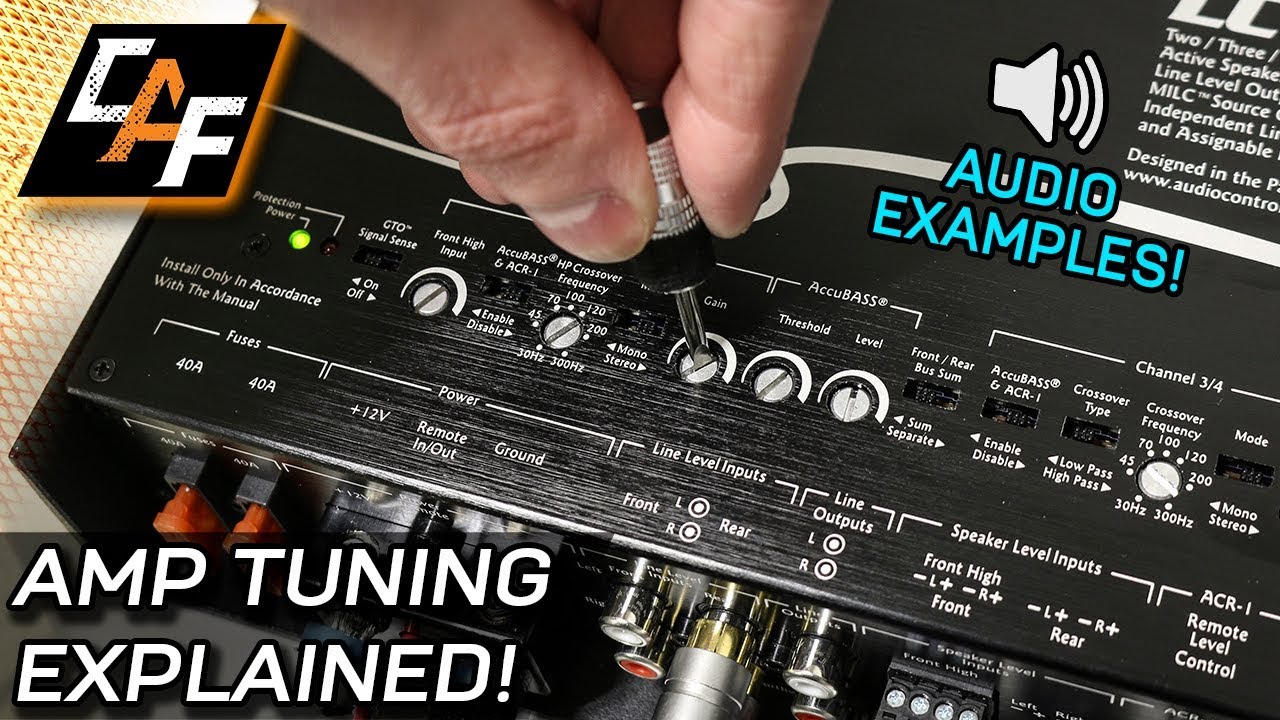
If you want to get the most out of your subwoofer, it is important to learn how to properly tune your amplifier. This includes setting the gain and crossover settings in order to make sure that each component of your sound system is working at its peak efficiency. By doing this, you can enjoy the full range of sounds that your subwoofer has to offer while avoiding distortion or feedback issues.
Additionally, taking these steps will ensure that all components are in sync with one another for a powerful and balanced overall listening experience.
Credit: www.youtube.com
How Do I Adjust My Amp Settings?
When it comes to adjusting the settings on your amp, you will want to take some time and experiment with different settings until you find the sound that works best for your style of playing. To begin, make sure all of the knobs are set at their baseline level (usually 12 o’clock). Start by making small adjustments in volume, gain or EQ levels.
Listen carefully as you adjust each knob and make notes about what sounds good and which ones don’t work well together. Continue experimenting until you find a combination that gives you the tone that is just right for your music.
What Frequency Should I Set My Amp To?
* Set the amp to 80-120 Hz for low-frequency sounds. * Set the amp to 200-500 Hz for mid-range frequencies. * For high frequency sounds, set the amp to 1 kHz or higher.
The exact frequency of your amplifier will depend on what kind of sound you are trying to achieve and what type of equipment you are using. It is important to experiment with these settings in order to get the desired result. Additionally, it may be helpful to consult an audio engineer or experienced musician if you need more specific advice regarding setting up your amplifier’s frequency range.
How Do I Set My Amp to Get the Best Sound?
* Turn the volume knob up to get a good sound level. * Adjust the treble and bass knobs until you hear a balanced sound. * Make small adjustments to the mid-range frequency if needed.
* If your amp has an EQ section, use it to fine-tune your overall tonal balance. Setting your amp correctly can make all the difference when trying to achieve great tone. It’s important to experiment with different settings in order to find what works best for you and your setup.
Start by adjusting the volume knob first and then tweak other controls such as treble, bass, and mids until you have found a setting that sounds good from low to high volumes. Finally, if available on your amplifier, use its EQ section for further refinements of tone or any special effects desired for certain songs or genres of music being played through it.
How Do I Adjust My Amp for Subs?
* Make sure the gain on your amplifier is turned down (it should not be higher than halfway). * Adjust the crossover frequency to its lowest setting. * Increase the bass boost until you hear a slight distortion or rattling in your subwoofers.
* Use a test tone generator to adjust the input and output level of each channel for optimal performance. * Finally, turn up the gain on your amplifier until you reach desired volume levels. To properly adjust an amp for subs, it is important to first make sure that all settings are as low as possible before increasing them incrementally in order to find an optimal balance between sound quality and volume level.
This involves adjusting both external factors such as gain and internal ones like crossover frequency and bass boost before finally adjusting input/output levels with a test tone generator. Following this step-by-step process will ensure that one’s amp is correctly set up for their subs so they can enjoy great sound without any unnecessary distortion or rattling noise.
Conclusion
Overall, amplifier adjustment is a complex process that requires knowledge of both electronics and acoustics. It can be challenging to adjust an amplifier without proper training or guidance, so if you are new to the process it’s best to seek out professional help and advice. With patience and practice, however, anyone can learn how to properly adjust their amplifier and achieve the sound they desire.