

Choosing between a band saw and a circular saw for your sawmill can be tough. Both have their strengths and serve different needs.
Understanding these differences is crucial for making an informed decision. When it comes to sawmills, the right equipment can significantly impact efficiency and output. A band saw and a circular saw are two popular choices, each with unique features. In this blog post, we will compare these two types of saws.
We’ll explore their advantages, disadvantages, and best use cases. Whether you’re a seasoned professional or new to woodworking, this comparison will help you determine which saw fits your needs best. Stay tuned as we dive into the details of band saws versus circular saws in the sawmilling world.
Band Saw Sawmill Basics
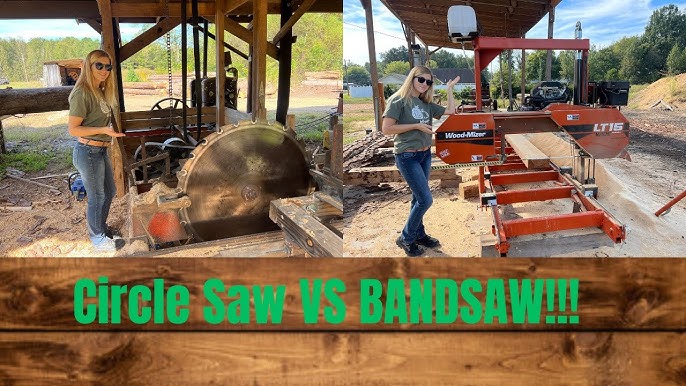
Band saw sawmills and circular saw sawmills differ in their cutting techniques and efficiency. Band saws offer precision and smoother cuts, while circular saws are faster and more powerful. Each has its advantages depending on the specific milling needs.
Band saw sawmills are versatile and efficient tools for cutting logs into lumber. Whether you’re a hobbyist or a professional, understanding the basics can help you make the most of your sawmill. Let’s dive into how a band saw sawmill works and its key components.
How It Works
Band saw sawmills use a long, continuous band of steel with teeth to cut through logs. The band moves on two wheels, creating a precise and consistent cut. This setup allows for smoother and thinner cuts compared to other types of sawmills.
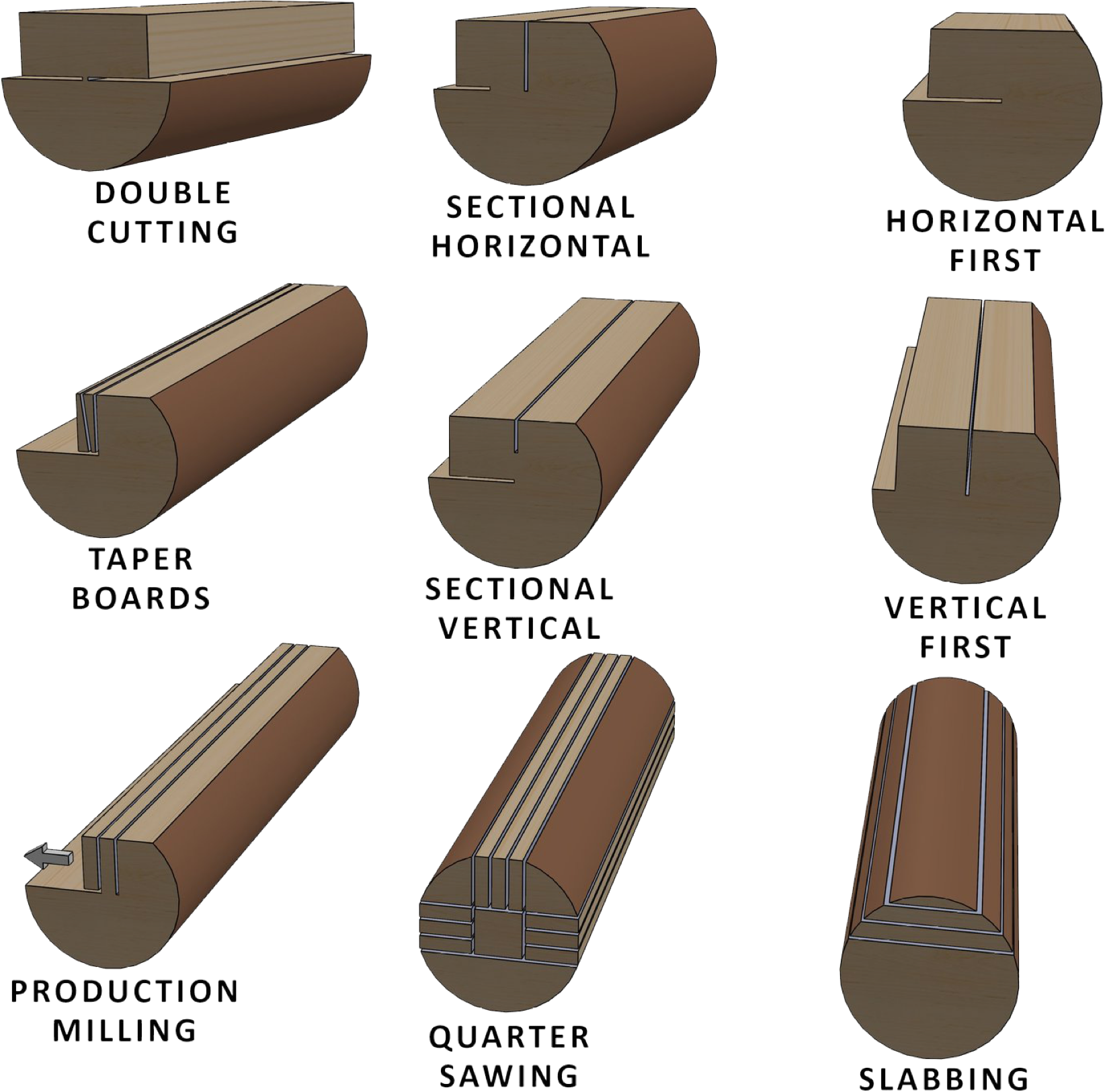
Logs are loaded onto a bed, and the band saw travels horizontally through the wood. You can adjust the thickness of the cut by raising or lowering the blade. This flexibility makes band saw sawmills ideal for producing a variety of lumber sizes.
Key Components
The blade is the heart of the band saw sawmill. It’s important to keep it sharp and properly tensioned for clean cuts. Dull blades can lead to uneven lumber and increased wear on the machine.
The wheels are crucial for keeping the blade in motion. They need to be aligned correctly to ensure smooth operation. Regular maintenance can prevent costly downtime.
The bed supports the log and ensures it stays in place during cutting. A sturdy and adjustable bed enhances the sawmill’s versatility. You can handle different log sizes with ease.
The motor powers the sawmill. The horsepower of the motor determines how efficiently you can cut through tougher woods. More power means faster and smoother cuts.
Personal Insight
When I first used a band saw sawmill, I was amazed by its precision. Adjusting the blade height allowed me to get the exact thickness I needed. This precision was a game-changer for my woodworking projects.
Have you ever struggled with uneven cuts using other sawmills? A band saw sawmill might be the solution you’re looking for. It’s efficient, versatile, and perfect for both small and large-scale projects.
Practical Tips
– Keep your blade sharp: Regularly check and sharpen the blade to maintain cutting efficiency.
– Align the wheels: Proper alignment prevents blade wobble and ensures smooth cuts.
– Secure the log: Make sure the log is firmly placed on the bed to avoid movement during cutting.
– Choose the right motor: Match the motor power to the type of wood you’ll be cutting.
These tips can help you get the best results from your band saw sawmill. Happy sawing!
Circular Saw Sawmill Basics
Are you considering a circular saw sawmill for your woodworking projects? Circular saw sawmills are robust, efficient machines that have been a staple in the lumber industry for decades. Let’s dive into the basics to see if this might be the right fit for your needs.
How It Works
A circular saw sawmill operates using a large, circular blade to cut logs into lumber. The circular blade rotates at high speeds, allowing it to slice through wood with ease. This process is great for producing a high volume of lumber quickly.
When you feed a log into the sawmill, the blade cuts it into slabs. This is done repeatedly until the log is fully processed. The circular saw’s continuous cutting motion ensures smooth and consistent cuts.
If you’ve ever used a handheld circular saw, the principle is the same, but on a much larger scale. The efficiency and speed can be a game changer for any serious woodworker.
Key Components
Understanding the key components of a circular saw sawmill can help you make an informed decision. First, there’s the saw blade itself. Typically made of high-carbon steel, the blade must be kept sharp to ensure precision cuts.
The motor is another critical component. It powers the saw blade and must be powerful enough to maintain high speeds without bogging down. Look for a motor with sufficient horsepower to handle the type of wood you’ll be milling.
Another essential part is the log deck, where logs are placed before being fed into the saw. A sturdy log deck ensures stability and safety during the milling process. Some models come with hydraulic log turners to make handling large logs easier.
Finally, pay attention to the saw’s track system. This guides the log through the blade, ensuring straight cuts. A well-maintained track system is crucial for producing uniform lumber.
Have you ever thought about what type of projects you could tackle with a circular saw sawmill? Imagine the possibilities! With the right setup, you could be turning raw logs into beautiful, usable lumber in no time.
Performance Comparison
When you’re choosing between a band saw and a circular saw for your sawmill, understanding their performance is crucial. Let’s dive into a detailed comparison, focusing on two critical aspects: cutting precision and speed and efficiency.
Cutting Precision
Both band saws and circular saws offer distinct advantages in terms of cutting precision. Band saws are known for their ability to make very fine cuts. This is due to their thin blades, which reduce material waste and allow for intricate shapes and curves.
On the other hand, circular saws, with their thicker blades, excel in making straight, consistent cuts. If your work requires long, straight cuts, a circular saw might be your best bet. However, it tends to produce more waste compared to a band saw.
Think about the kind of projects you’re tackling. Do you need to carve out detailed patterns or make precise, straight cuts? Your answer will guide you in choosing between these saws.
Speed And Efficiency
Speed and efficiency are game-changers in any sawmill operation. Band saws generally operate at a slower pace but make up for this with their high level of precision and reduced waste. This means you might spend less time on finishing touches.
Circular saws, however, are built for speed. They cut through materials quickly, making them ideal for high-volume tasks. If you need to process a large number of logs in a short period, a circular saw will get the job done faster.
Ask yourself: Do you value speed over precision, or is it the other way around? Answering this will help you make an informed choice.
Choosing the right sawmill tool isn’t just about performance on paper. It’s about matching the tool to your specific needs and workflow. Whether you prioritize precision or speed, understanding these aspects will help you make the best decision for your projects.
Cost Analysis
Choosing between a band saw and a circular saw for your sawmill involves analyzing costs. Understanding the financial aspects helps make an informed decision. Let’s break down the costs associated with each type of sawmill.
Initial Investment
Band sawmills typically have a higher initial investment. They require more complex machinery. This makes them more expensive upfront. Circular sawmills, on the other hand, are simpler. They often have a lower initial cost. This makes them attractive for those on a budget.
Maintenance And Operating Costs
Maintenance costs vary between the two sawmills. Band sawmills need regular blade replacements. This can add up over time. Circular sawmills also require maintenance. But their blades last longer. This can reduce ongoing costs.
Operating costs include fuel, electricity, and labor. Band sawmills generally consume less power. This can save money in the long run. Circular sawmills may need more energy. This increases operating expenses.
Both sawmills need skilled operators. Training costs can impact your budget. Consider these factors when comparing overall costs.
Versatility And Applications
Choosing between a band saw and a circular saw sawmill can be tricky. Each has its unique strengths and best-use scenarios. Understanding their versatility and applications can help you make the right decision for your woodworking projects.
Types Of Wood
Different saws handle different types of wood better. A band saw can efficiently cut through dense hardwoods like oak and maple. Its thin blade makes smooth cuts, minimizing waste.
On the other hand, a circular saw excels with softwoods like pine and cedar. Its powerful motor can quickly slice through these materials, making it ideal for large-scale projects.
Have you ever tried cutting a thick piece of walnut? A band saw would be your best bet. But for plywood sheets, a circular saw is faster and more efficient.
Range Of Projects
Consider what projects you usually tackle. If you often work on detailed designs and intricate cuts, a band saw’s precision is unmatched. It’s perfect for making furniture or decorative pieces.
If your projects involve straightforward, long cuts, like framing a house or building a deck, a circular saw will save you time. Its speed and power are designed for such tasks.
Think about your future projects too. Do you plan to venture into more complex woodworking? Or do you need a reliable tool for construction jobs? Your answers will guide your choice.
Have you faced challenges with your current saw? Maybe it’s time to upgrade based on your evolving needs.
Overall, assessing the types of wood you use and the range of projects you undertake will help you choose the right sawmill. What’s your next big project? The right tool can make all the difference.
Credit: www.youtube.com
Safety Considerations
Safety is a crucial aspect to consider in any sawing operation. Both band saw and circular saw sawmills have their unique safety challenges. Understanding these can help you make a more informed decision about which sawmill suits your needs.
Common Risks
Band saw sawmills pose certain risks. The blade moves continuously, which can lead to severe injuries. Also, the blade can break or snap during use.
Circular saw sawmills have their own set of dangers. Kickbacks can occur, causing the wood to fly back. The large, exposed blade is also hazardous.
Safety Features
Band saw sawmills often come with blade guards. These help to reduce accidental contact with the blade. Some models also feature automatic blade tensioning systems.
Circular saw sawmills usually include anti-kickback features. Blade guards and riving knives are common. These features help to minimize the risk of accidents.
Making The Right Choice
Choosing between a band saw and a circular saw for your sawmill is a crucial decision. Each type of saw has unique advantages and specific applications. Understanding your needs and expert recommendations can help you make the right choice.
Assessing Your Needs
Before you decide, evaluate what you need from your sawmill. Are you looking for precision or speed?
Band saws offer superior accuracy, making them ideal for intricate cuts. They are perfect for projects requiring detailed work.
Circular saws, on the other hand, are known for their speed and efficiency. If you need quick, clean cuts, a circular saw might be your best bet.
Consider the type of wood you’ll be working with. Band saws handle dense hardwoods better, while circular saws excel with softer woods.
Expert Recommendations
Experts suggest considering the scale of your project. For large scale operations, a circular saw’s speed can be a game changer.
However, for smaller, detailed projects, the band saw’s precision is unmatched. Personal experience shows that band saws are excellent for custom furniture making.
Think about maintenance. Band saws require more upkeep due to their complexity. Circular saws, with fewer moving parts, are easier to maintain.
Budget is another factor. Band saws tend to be more expensive upfront, but their longevity might justify the investment.
Which saw fits your needs best? Do you prioritize precision or speed? Share your thoughts in the comments and let’s discuss!
Credit: turbosawmill.com
Frequently Asked Questions
Why Do Many Commercial Sawmills Use A Bandsaw Instead Of A Circular Saw To Cut Up Their Lumber?
Bandsaws offer greater precision and less waste than circular saws. They can handle larger and harder logs efficiently. Their thinner blades result in smoother cuts and higher lumber yield.
Can You Use A Band Saw To Mill Wood?
Yes, you can mill wood with a band saw. It efficiently cuts logs into lumber. Ensure proper setup and blade type for best results.
What Is The Difference Between A Bandsaw And A Circular Saw?
A bandsaw uses a continuous loop blade, ideal for intricate cuts. A circular saw has a rotating blade, perfect for straight cuts.
Why Do Most Woodworkers Buy A Bandsaw As Their First Machine?
Most woodworkers buy a bandsaw first for its versatility. It cuts curves, resaws, and handles various materials efficiently.
Conclusion
Choosing between a band saw and a circular saw depends on your needs. Band saws offer precision and smooth cuts. Circular saws provide speed and portability. Think about your projects and workspace. Each tool has its strengths. Whether you need detailed cuts or quick jobs, there’s a sawmill for you.
Consider your budget and the type of woodwork you do. Make an informed decision. Happy woodworking!