
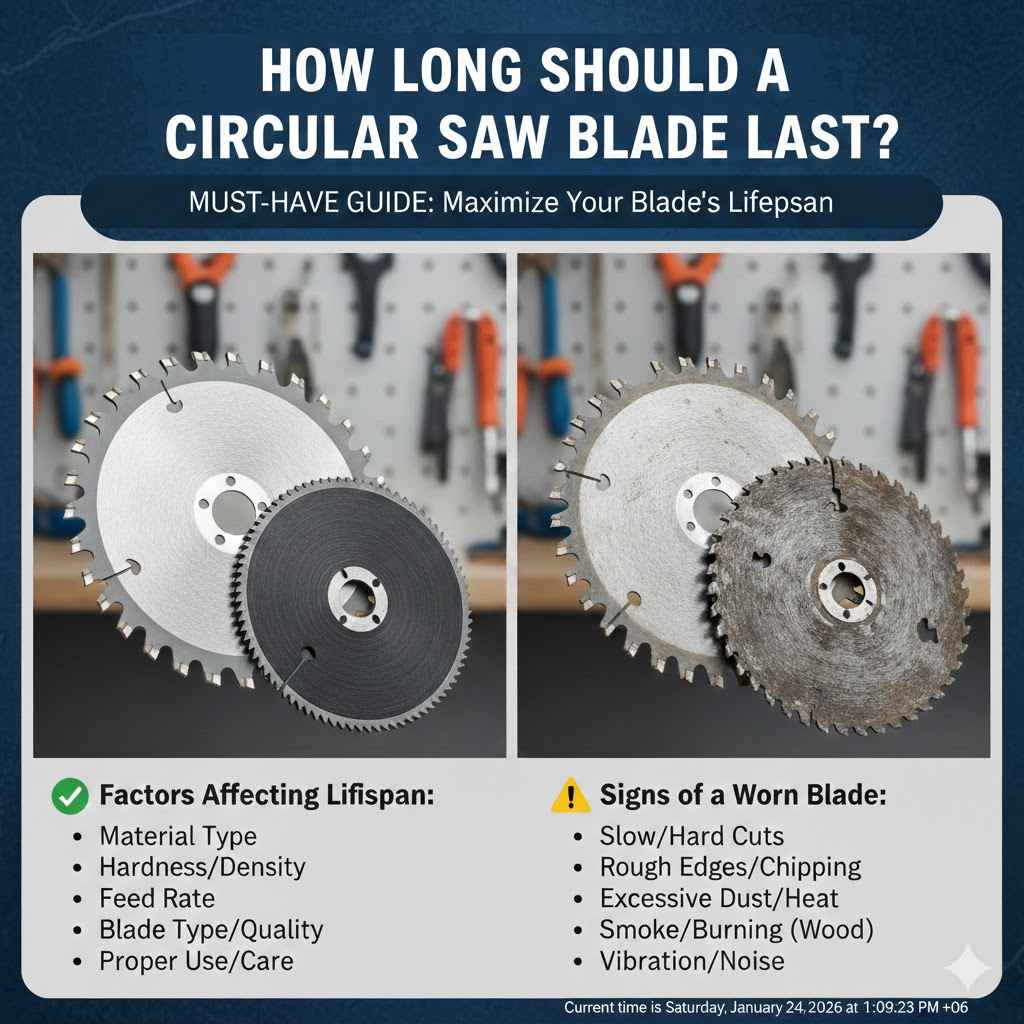
A circular saw blade’s life varies hugely, usually ranging from 12 hours of continuous professional cutting to several years for a casual DIYer. High-quality carbide blades cutting soft wood might last 40+ hours, while cheap steel blades cutting dense materials may dull in under an hour. Proper care, matching the blade to the material, and regular cleaning are key to maximizing its longevity.
Welcome to the workshop! If you are new to using a circular saw, you might be wondering: “How often do I need to buy a new blade?” It’s a great question. There is nothing more frustrating than starting a cut only to find the blade dragging, smoking, or leaving terrible splintered edges. That feeling of struggle drains the fun right out of a project.
The truth is, there is no single answer for how long a blade lasts. Blade longevity depends on how you use it and what you are cutting. Buying the right blade and knowing how to care for it saves you money and makes your projects look professional.
As your woodworking mentor, I’m here to guide you through the process. We will look at the essential factors that determine your blade’s lifespan and give you clear, achievable steps to keep your saw cutting clean and sharp for much longer.
Understanding Circular Saw Blade Longevity
When a blade stops performing well, it’s not always broken—it might just be dull or dirty. For beginners, knowing the difference between a blade that needs cleaning and a blade that needs replacing is the biggest money saver. Let’s break down the three main categories that determine how many cuts you get from a single blade.

Factor 1: The Blade Itself (Quality and Material)
The type of blade you buy is the number one predictor of its longevity. Don’t fall for the cheapest option at the hardware store. That thin, shiny blade might cut once, but it won’t last.
Blade Material Matters Most
Circular saw blades are generally made from two main materials:
- High-Speed Steel (HSS): These are usually the cheapest blades. They are okay for cutting very soft materials like thin plywood or plastic, but they dull quickly when hitting common construction lumber. They are generally considered “disposable” blades.
- Carbide-Tipped Blades (CT): This is the standard for serious DIY and professional work. Carbide is an incredibly hard material fused onto the tips of the teeth. These blades cost more upfront, but they last ten to twenty times longer than HSS blades and can often be sharpened multiple times. If you want durability, always choose carbide.
The Role of Kerf (Blade Thickness)
Kerf is the thickness of the material removed by the blade. Blades are either standard kerf or thin kerf. Thin kerf blades require less power from your saw because they remove less material. While this is great for smaller saws or battery-powered tools, thin blades can sometimes warp or overheat more easily, potentially reducing their overall lifespan if pushed too hard.
Factor 2: What You Are Cutting (Material Density)
A blade cutting soft pine for two hours is not experiencing the same wear as a blade cutting dense, abrasive reclaimed oak for two hours. The harder and dirtier the material, the faster the blade dulls.
Softwood vs. Hardwood
Cutting softwood (like pine, fir, or cedar) is easy on the blade. These materials are less dense and don’t generate as much heat or friction. Conversely, hardwoods (like oak, maple, or exotic woods) are much denser. Cutting hardwoods demands more force and creates significant friction and heat, which rapidly breaks down the sharp edges of the blade’s teeth.
Abrasive and Contaminating Materials
Be extra cautious when cutting materials that are dusty or dirty:
- Pressure-Treated Lumber: This wood contains chemicals and sometimes grit from the treatment process, making it highly abrasive and shortening blade life.
- Reclaimed Wood: Even if you clean it, reclaimed wood often hides tiny pieces of dirt, dried concrete, or even small nails and screws. Hitting metal is the fastest way to ruin a blade instantly.
- Melamine or Laminates: These materials have plastic or glue coatings that heat up quickly. This heat causes the glue or plastic to melt and stick (or “pitch”) to the blade, which makes the blade feel dull very quickly.
Factor 3: How You Use The Blade (Technique and Care)
Even the most expensive carbide blade will fail fast if you use poor technique. This factor is completely within your control!
Feed Rate (Speed of the Cut)
A common beginner mistake is pushing the saw too fast. You must let the blade do the work. If you force the saw through the wood, you are generating excessive friction and heat. This not only dulls the blade but can also cause “burning” marks on your wood and is a serious safety hazard called kickback.
Blade Cleaning and Storage
Saw blades don’t just get dull; they get dirty. Wood sap, resin, and pitch build up on the teeth and the side of the blade. This sticky buildup increases friction drastically. A dirty blade acts like a dull blade, forcing you to push harder and potentially overheating the motor. Regular cleaning is mandatory for maximizing life.
Expected Lifespan Table: How Long Will My Blade Last?
To give you a better idea, here are some realistic ranges for how long different quality blades will last under different conditions. These figures represent total cutting time, not shelf time.
| Blade Type & Quality | Cutting Material | Expected Cutting Hours (Before Sharpening/Replacement) | Typical DIY Lifespan (Casual Use) |
|---|---|---|---|
| Cheap Steel (HSS) | Softwood, MDF | 1 – 5 hours | 1 – 3 small projects (often thrown away after dulling) |
| Basic Carbide (24T-40T) | Softwood, Plywood | 15 – 30 hours | 1 – 2 years (with periodic cleaning) |
| Premium Carbide (60T-80T) | Hardwood, Laminates, Plastics | 30 – 50 hours | 2 – 5 years (can be sharpened multiple times) |
| Specialty (Diamond/Abrasive) | Concrete, Masonry, Fiber Cement | Highly variable; often measured in linear feet, not hours. | As needed for specific tasks. |
Remember: For a DIY homeowner who only uses their saw for weekend projects a few times a year, even a basic carbide blade might last five or more years, provided it’s cleaned regularly and stored correctly.
Diagnosis: 4 Clear Signs Your Blade Needs Attention
You don’t need a stopwatch to track blade life. Your saw will tell you exactly when the blade is failing. Listen to your tool and look closely at the wood. Here are the most common warning signs:
1. Increased Resistance (You Have to Push Harder)
This is the clearest sign. When the blade is sharp, the saw should glide through the wood with minimal effort. If you notice you have to apply significantly more muscle than usual, the blade is dull. Pushing harder leads to overheating and motor strain.
2. Burning or Smoking
Friction causes heat. If you see smoke coming from the cut line, or if the edges of the wood turn dark brown or black (burning), the blade is dull, dirty, or both. The dull teeth are rubbing the wood fibers instead of cleanly slicing them, generating intense heat.
3. Rough, Splintered, or Fuzzy Edges
A good, sharp blade leaves a relatively smooth, clean edge. If your cuts look rough, torn, or splintered, the blade is no longer cutting effectively. This is especially true when cutting plywood or veneered materials where dull blades tear the thin surface layer instead of slicing it cleanly.
4. Loud Motor Noise and Vibration
- When the blade is sharp, the saw sounds strong and consistent. When the blade is dull or dirty, the motor struggles. You might hear the motor whine loudly, or the entire saw might vibrate excessively as it tries to power through the resistance. This puts undue stress on the tool itself, potentially shortening the life of your saw’s motor.
Step-by-Step Guide: Making Your Circular Saw Blades Last Longer
The single most effective action a beginner can take to extend blade life is regular cleaning. A blade that feels dull might just be covered in pitch (sticky sap and resin). Follow these simple maintenance steps.
Step 1: Always Disconnect Power First (Safety!)
Before you touch the blade for any reason—cleaning, changing, or just inspection—unplug the circular saw. If it’s a cordless model, remove the battery. Never work on a saw that is still connected to power. Safety is always priority number one in my shop.
Step 2: Inspect and Clean the Blade
Cleaning pitch and resin off the blade removes the friction that makes it feel dull. This is an easy process:
- Remove the Blade: Follow your saw’s instruction manual to remove the blade safely. Keep track of the arbor nut and washers.
- Prepare the Cleaner: You can purchase specialized pitch and resin cleaner, but an excellent, accessible, and affordable alternative is simple oven cleaner or citrus-based degreaser (like Simple Green). Avoid petroleum-based cleaners, which can sometimes damage bonding materials.
- Soak (Optional): For heavy buildup, place the blade in a shallow container and let it soak for 15–30 minutes in the cleaning solution, ensuring the carbide tips are submerged.
- Scrub Gently: Use an old toothbrush, plastic bristle brush, or brass brush to scrub the faces and tips of the teeth. You should see the sticky residue dissolving and falling off. Never use a steel wire brush, as this can scratch the blade body.
- Rinse and Dry: Rinse the blade thoroughly with water and immediately dry it completely with a clean rag. Do not let it air dry, as this can lead to surface rust.
Step 3: Lubricate and Protect
Once the blade is sparkling clean, apply a light coat of a dry lubricant or rust-inhibiting oil (like WD-40 Specialist Dry Lube) to the blade body. This helps prevent future pitch buildup and protects the steel from rust, especially if you live in a humid area.
Step 4: Match the Blade to the Job (Teeth Count)
A blade’s tooth count (TPI – Teeth Per Inch) dramatically impacts its life and performance. Using the wrong blade for the material forces you to work harder, shortening the blade’s life quickly. Here is a simple guide:
| Teeth Count (T) | Best Use | Type of Cut |
|---|---|---|
| 24T – 30T | Thick wood, Framing Lumber | Fast, rough cuts (Rip Cutting) |
| 40T – 50T | General purpose, Plywood, OSB | Good balance of speed and finish (Combination) |
| 60T – 80T | Fine woods, Cabinetry, Laminates | Slow, fine, smooth cuts (Cross Cutting) |
For most beginners cutting two-by-fours and basic plywood, a good 40T general-purpose carbide blade is the sweet spot.
Step 5: Control the Cutting Environment
A blade hates moisture and debris. Whenever possible, store lumber inside a garage or shed where it is dry. Wood that has been left outside and absorbed moisture is much tougher to cut and can lead to increased rust on your blades.
Furthermore, ensure your workpiece is stable. Wobbly or improperly supported wood creates tension, which can pinch the blade mid-cut. This pinching not only stresses the saw motor and blade, causing premature wear, but it is also the primary cause of dangerous kickback. Proper cutting technique is a matter of safety and blade longevity. You can learn more about proper support and cutting techniques from reputable sources like the Occupational Safety and Health Administration (OSHA) guidelines on power tool safety here.
When Should I Sharpen My Carbide Blade?
Unlike cheap steel blades, good quality carbide-tipped blades are worth sharpening. Sharpening can often restore 80–90% of the blade’s original cutting quality, and you can usually get two to five sharpenings out of a quality blade before the carbide tips wear down too much.
However, sharpening carbide is not a DIY task for the beginner. The tips are extremely hard and require specialized grinding equipment and careful measurement of the tooth angles.
The Decision Point: Sharpen vs. Replace
Here is a simple financial rule of thumb for carbide blades:
- If the blade is cheap (under $20): Replace it. Sharpening costs may exceed the price of a new one.
- If the blade is high quality ($30+): Get it sharpened. The average cost for professional sharpening is usually between $8 and $15 per blade, which is much cheaper than buying a new premium blade.
- If the blade is bent or missing several teeth: Replace it immediately. A damaged blade is unsafe to use, and missing teeth throw the blade completely out of balance.
Look for local sharpening services that specialize in saw blades or check with local lumberyards; they often know a reliable local sharpener.
Blade Safety: Essential Tips for Beginners
The best way to prolong blade life is also the safest way to operate your saw. Slow, steady cuts are key.
1. Never Force the Cut
If you feel resistance, pull back slightly and let the blade spin up to full speed before continuing. Forcing a dull blade is the fastest way to ruin the blade, damage the motor, and cause kickback.
2. Always Use the Blade Guard
The lower blade guard is a critical safety feature. It protects your hands from the spinning blade and protects the delicate carbide teeth from chipping when you set the saw down on concrete or a hard surface. Always make sure the guard moves freely.
3. Check for Nails and Screws
Before cutting any reclaimed or used lumber, run a metal detector or a powerful magnet over the wood. Hitting metal will chip or break the carbide tips, instantly ruining the blade. It takes five minutes to scan the wood and saves you fifty dollars on a new blade.
4. Store Blades Properly
When blades are not on the saw, store them in their original plastic packaging or in a dedicated storage case. Loose blades rolling around in a toolbox will inevitably get chipped or hit other hard objects, damaging the teeth.

Frequently Asked Questions (FAQ)
Q1: Does the number of teeth (TPI) affect blade life?
Yes. Blades with fewer teeth (24T) are stronger, cut faster, and are very durable, ideal for rip cuts in thick wood. Blades with more teeth (60T+) create a finer cut but the teeth are smaller and more numerous, meaning they heat up faster and can dull quicker if pushed hard or used on dirty material. Always match the TPI to the material for best results and longest life.
Q2: Can I sharpen a steel blade myself?
While you theoretically can, cheap steel (HSS) blades often have uneven tooth geometry and are so inexpensive (often under $10) that sharpening them is rarely worth the time or effort. It is generally easier and more effective to simply replace an HSS blade once it dulls.
Q3: How often should I clean my circular saw blade?
If you are cutting oily woods like pine or using pressure-treated lumber, you should clean your blade after every major cutting session (e.g., after every full weekend project). If you only cut dry, clean materials like plywood, cleaning it every three to four months of use is usually sufficient. When in doubt, clean it!
Q4: What causes a blade to wobble during a cut?
Blade wobble, or runout, is usually caused by one of three things: 1) The blade is warped from overheating, 2) The arbor bolt (nut) is loose, or 3) There is sawdust, debris, or pitch stuck between the blade and the arbor washers. If tightening the arbor doesn’t fix it, remove the blade, clean the washers and the shaft thoroughly, and re-install a clean blade.
Q5: Should I buy a standard kerf or thin kerf blade?
For most beginners using a standard circular saw, a thin kerf blade is often a great choice. It requires less motor power, which is easier on your saw and battery, and helps prevent bogging down. However, if you are using a powerful table saw or regularly cut very thick, hard stock, a standard kerf blade offers more stability and heat resistance.
Q6: What is the most common reason a beginner ruins a blade quickly?
The most common reason is hitting metal (nails, screws, staples) in the wood, followed closely by forcing the cut through material when the blade is already dirty or slightly dull. Patience and preparation save blades.
Q7: Do specialty blades (e.g., for metal or masonry) last longer than wood blades?
They are designed for tougher tasks, but they wear out differently. A diamond-tipped masonry blade can cut thousands of linear feet of concrete, but the diamond material slowly wears away (gets consumed). An abrasive metal blade is designed to deteriorate quickly and safely as it cuts, meaning its lifespan is inherently short—it is meant to be replaced frequently.
Conclusion: Keep Your Blade Sharp and Your Cuts Clean
As you can see, the life of your circular saw blade is not a mystery; it’s a direct result of the choices you make in the workshop. If you choose a quality carbide blade, match the TPI to the material, and prioritize regular cleaning, your blade will easily serve you for years of enjoyable DIY projects.
Don’t wait until your saw is smoking or fighting you to check your blade. Make regular inspection and cleaning part of your routine. This proactive maintenance keeps your cuts clean, protects your saw, and ensures that woodworking remains rewarding and stress-free. Happy cutting, and remember to always stay safe!