

The safest way to dispose of old circular saw blades is through metal recycling. Never put blades in household trash or recycling bins loose. First, clean the blade, wrap it securely in heavy cardboard or a hard plastic container, tape it tightly, and label it clearly as “Scrap Metal: Sharp.” Then, take it to your local scrap yard or designated hazardous waste facility.
If you love working with wood, you know that keeping your saw sharp is essential for clean cuts and safety. But what happens when that reliable circular saw blade finally gives up the ghost? It’s too dull to use, maybe missing a few carbide teeth, and it’s definitely too sharp to just toss into the trash bin.
This is a common frustration for many homeowners and DIYers. These metal monsters are bulky, potentially dangerous, and they don’t seem to fit into the normal recycling routine. The good news is that you absolutely can dispose of them safely and responsibly. As your woodworking mentor, I’ll walk you through the simple, clear steps to prepare and recycle those old blades, ensuring safety for you and sanitation workers alike. Let’s turn confusion into confidence!
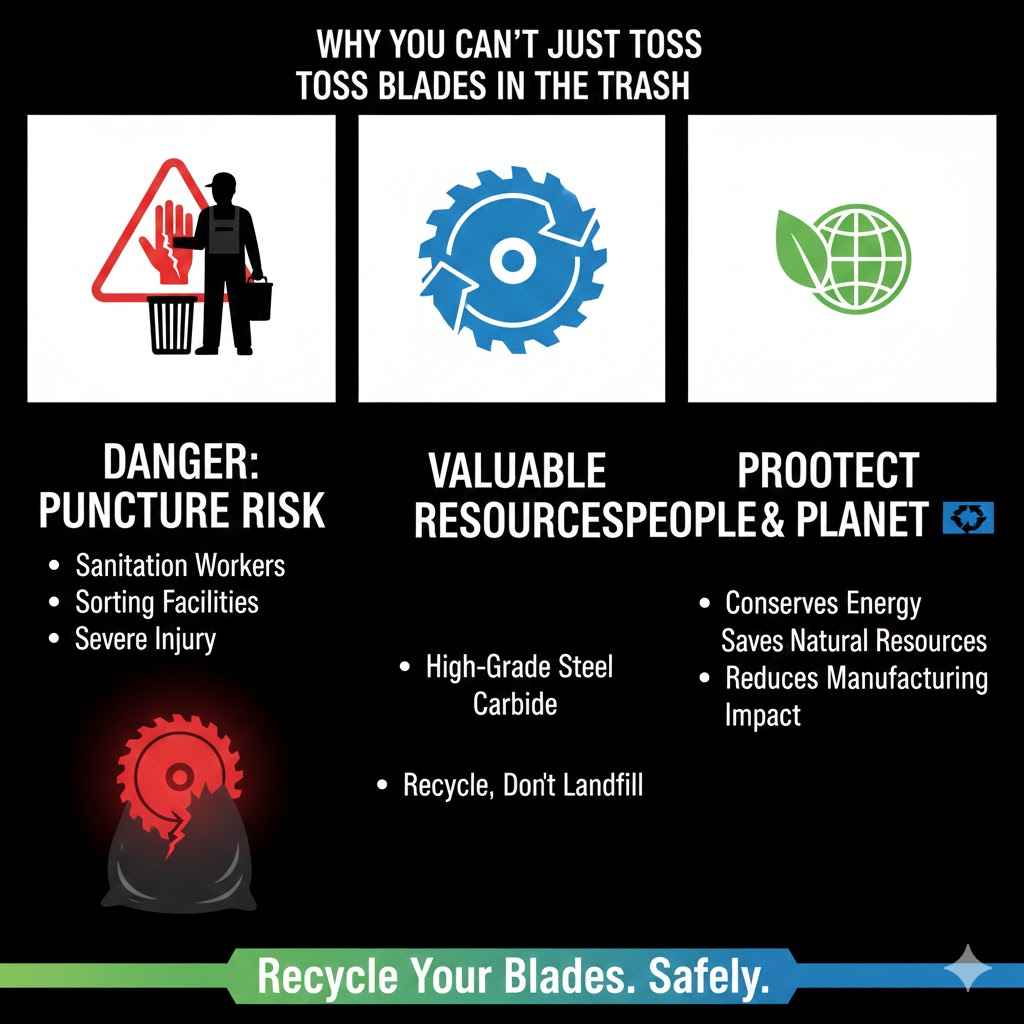
Why You Can’t Just Toss Blades in the Trash
When we finish a project, it is tempting to just bag up the waste and be done with it. However, placing old, exposed circular saw blades—or any sharp scrap metal—into your regular garbage is genuinely dangerous. These blades pose a serious puncture risk.
Think about the people handling the trash: the sanitation workers who compact the load or the sorting facility employees. An unwrapped blade can easily slice through a garbage bag, leading to severe injury. Plus, most saw blades are made of high-grade steel, often mixed with carbide, making them valuable resources that should be recycled, not sent to a landfill.
Recycling these metals conserves energy and natural resources far better than manufacturing new materials from scratch. By taking a few extra minutes to prepare your old blades, you protect people and the planet.
Preparation is Key: Essential Steps Before Disposal
The entire disposal process hinges on one critical element: safety preparation. A sharp blade is dangerous whether it’s attached to your saw or sitting in a pile of junk. Follow these steps carefully to neutralize the hazard.
Step 1: Clean and Inspect the Blade
Before you wrap anything, you want the blade to be clean. Blades often accumulate pitch, sap, and residue from cutting wood. This gunk makes the blade sticky and unpleasant to handle, and sometimes recycling facilities prefer cleaner metal.
- Remove Heavy Debris: Use a stiff plastic brush or a dull scraper to knock off large clumps of wood or dried glue.
- Apply Cleaner: Soak the blade in a dedicated pitch and resin remover, or use a simple solvent like mineral spirits. Allow it to soak for 15 minutes.
- Scrub Gently: Wearing heavy-duty gloves, lightly scrub away the remaining residue.
- Dry Completely: Ensure the blade is completely dry before proceeding to the wrapping stage to prevent rust or moisture damage inside the wrapping.
Once clean, inspect the blade. If it’s entirely steel, the process is straightforward. If it has carbide tips, note this, as it may change where you take it (but not how you wrap it).
Step 2: The Critical Safety Wrapping
This is the most important step. We need to create a protective shell that prevents the blade edges from coming into contact with anyone’s hands or bags. Do not skip this!
Materials Needed for Wrapping:
- Heavy-duty gloves (leather or thick nitrile)
- Thick corrugated cardboard (appliance boxes are great)
- A permanent marker
- Heavy-duty duct tape (or packing tape)
Wrapping Instructions (Step-by-Step):
- Trace the Blade: Place the blade on the cardboard and trace its circumference precisely. You will need two pieces of cardboard traced this way—one for the front and one for the back.
- Cut the Cardboard: Carefully cut out both cardboard circles. Make sure they fully cover the teeth and extend slightly past the edge.
- Sandwich the Blade: Place the clean blade precisely between the two pieces of cardboard.
- Secure the Package: Use a generous amount of duct tape. Wrap the tape around the entire perimeter of the cardboard sandwich, ensuring every tooth edge is completely covered and secured by multiple layers of tape.
- Tape Across the Faces: Place strips of duct tape across the face of the cardboard, covering the arbor hole (the center hole) and securing the package tightly so the blade cannot shift or slip out.
- Label Clearly: Using your permanent marker, write clearly on both sides of the package: “SCRAP METAL – SHARP OBJECT INSIDE.” This warning is non-negotiable and lets the recycling handlers know exactly what they are dealing with.
If you have several smaller blades, you can also place them inside a thick, puncture-proof plastic container (like an old laundry detergent jug or coffee can) before sealing and labeling the outside of the container.
Three Best Ways to Dispose of Blades Safely
Once your blade is safely wrapped and labeled, you have several excellent options for disposal that keep the metal out of landfills and in the recycling loop. Choose the option that is easiest and most accessible for your location.
Option 1: Scrap Metal Recycling Centers (The Ideal Choice)
The vast majority of circular saw blades, especially those made of high-speed steel (HSS), are highly desirable scrap metal. Local scrap yards love taking these items because they can efficiently process and sell the material.
How to Proceed:
- Locate a Yard: Use an online search engine to find “local scrap metal recycling center” or “ferrous metal recycling near me.”
- Call Ahead: It’s always smart to call the center first. Ask, “Do you accept circular saw blades and other scrap steel?” and confirm their drop-off hours and any specific wrapping requirements they might have.
- Drop Off: Take your clearly labeled package to the center. They often have designated bins for different types of metals.
Depending on the current market value of steel and the weight of your material (you’ll need many blades to make a pile that weighs anything substantial), the scrap yard might even pay you a few dollars for the material. Even if they don’t, the service of recycling is often free.
Option 2: Local Hazardous Waste or Collection Events
While a saw blade is technically solid scrap metal, some municipalities treat extremely sharp objects or tools containing mixed materials (like carbide tips) as part of their Household Hazardous Waste (HHW) programs.
These collection points are often run by local government agencies. You can usually find information on their guidelines through your city or county website. For instance, the US Environmental Protection Agency (EPA) provides resources that can help you locate local solid waste authorities and their specific HHW rules. This is a reliable starting point for finding official local guidance.
Look for:
- Annual “Junk Day” or “Recycling Events.”
- Permanent Household Hazardous Waste facilities.
- Special “Scrap Metal Drop-off Days” held by the public works department.
If you cannot find clear information, call your local waste management company. They are experts in local rules and can point you toward the correct facility.
Option 3: Tool or Blade Manufacturer Take-Back Programs
This option is less common but worth investigating, especially if you use high-quality, professional-grade blades.
Some major tool and accessory manufacturers are committed to sustainability and offer “take-back” programs for their products. This is particularly true for items that contain specialized materials or high concentrations of carbide or tungsten, which are difficult for standard scrap yards to process.
Check the website of the company that made your blade (e.g., Diablo, DeWalt, Freud). They may provide mail-in instructions or specific drop-off locations for professional recycling of their proprietary materials.
When Can You Reuse or Repurpose the Blade?
If the blade isn’t completely rusted or broken, disposal isn’t the only option! Woodworking hobbyists often hate to see a sturdy piece of metal go to waste. If the blade is structurally sound, you might find a creative second life for it.
Creative Repurposing Ideas
Repurposing turns scrap into useful or decorative items. Before trying any of these projects, ensure the blade is thoroughly cleaned and that you handle it with extreme care, using thick gloves.
- Wall Art or Workshop Clocks: Clean blades make great industrial-style wall decorations or the base for a workshop clock.
- Yard Decorations: Some DIYers weld old blades into garden trellises or unique metallic sculptures.
- Gaskets or Washers: The steel material is perfect for cutting out custom-sized metal washers or gaskets needed for specialized machinery (only attempt this if you have the proper metal cutting tools).
- Knife Blanks (Advanced): For the metalworking hobbyist, the high-carbon or high-speed steel in some blades is excellent material for forging small knives or scrapers.
Warning: Never attempt to sharpen an old blade extensively for re-use on your circular saw if it has major cracks, severe missing teeth, or deformation. A damaged blade can shatter during use, causing severe injury. Repurposing should always be for static, non-cutting applications unless you are a professional metalworker.
Specific Disposal Rules for Different Blade Types
The composition of your blade matters primarily for where it gets recycled, not necessarily how you wrap it. Most blades fall into two main categories.
Carbide-Tipped Blades vs. Steel Blades
The difference between a standard steel blade and a carbide-tipped blade is crucial for the recycler. Carbide tips contain tungsten carbide, a very hard composite material. While valuable, this material must be separated from pure steel during processing.
| Blade Type | Primary Composition | Best Disposal Method | Notes for Recyclers |
|---|---|---|---|
| High-Speed Steel (HSS) | High-grade ferrous steel | Scrap Metal Yard (Ferrous Metals) | Purely steel and easily recyclable. Highly preferred by standard scrap centers. |
| Carbide-Tipped (TCT) | Steel plate with Tungsten Carbide tips | Specialized Scrap Yard or HHW Collection | The carbide tips must be processed separately. Some general scrap yards may reject them or require specific handling. |
| Non-Ferrous Blades (e.g., Aluminum cutting) | Special alloys of steel, sometimes with different coatings. | Scrap Metal Yard (Call ahead) | Confirm acceptance, as specialty alloys may need to go into a specific scrap stream. |
When you call the scrap yard (Option 1), be sure to specify if the blades are carbide-tipped. This allows them to direct you to the correct receiving area or processor.
Specialty Blades (Abrasive, Diamond)
What about specialized blades, like the diamond blades used for masonry or the abrasive discs used for cutting metal?
- Diamond Blades: These are usually steel cores with diamonds embedded in the rim. They are highly recyclable as scrap metal, but treat them like carbide-tipped blades. Wrap them carefully and confirm acceptance at the recycling facility.
- Abrasive Wheels (Cut-off Discs): These are usually made of fiberglass mesh and resin mixed with abrasive particles (like aluminum oxide). Because they are composite materials, they are typically NOT recyclable as scrap metal. Once used up, they must be wrapped securely (to contain the dust and sharp edges) and disposed of with general household trash, unless your local facility has a specific program for composite materials. Always wrap them in a sturdy container first.
Understanding Local Regulations: Why Checking Your Municipality Matters
Every county, city, or local waste authority sets its own rules regarding the disposal of sharp objects and scrap metal. What works in one state might not be allowed in another.
As a responsible homeowner, it is your duty to check the rules for your specific area. A quick search for “[Your City/County Name] scrap metal disposal rules” will usually lead you to the official public works or waste management website.
These local sites will clarify:
- Which scrap yards have official contracts with the city.
- Whether you must pay a fee to drop off materials.
- The schedule for HHW collection events.
- Specific requirements for labeling sharp objects (e.g., some require a specific type of container, not just cardboard).
By following local guidelines, you ensure you are legally compliant and that the material ends up in the correct waste stream, maximizing the chance of proper recycling.
Detailed Step-by-Step Instructions: The Confidence Checklist
To make this absolutely foolproof, here is the complete checklist for a safe and successful blade disposal:
- Preparation: Put on heavy gloves. Clean any pitch or residue off the blade.
- Containment: Trace and cut two pieces of heavy cardboard. Sandwich the blade between the cardboard.
- Security: Tape the entire package shut with multiple layers of duct tape, focusing on wrapping the outer edges where the teeth are located.
- Labeling: Write “SCRAP METAL – SHARP OBJECT INSIDE” clearly and boldly on both sides of the package.
- Research: Determine if your blade is HSS steel or carbide-tipped. Call your local scrap yard or check the municipal HHW website.
- Drop-Off: Transport the package safely to the designated metal recycling center or collection site.
Congratulations—you have successfully and responsibly disposed of a tricky item!
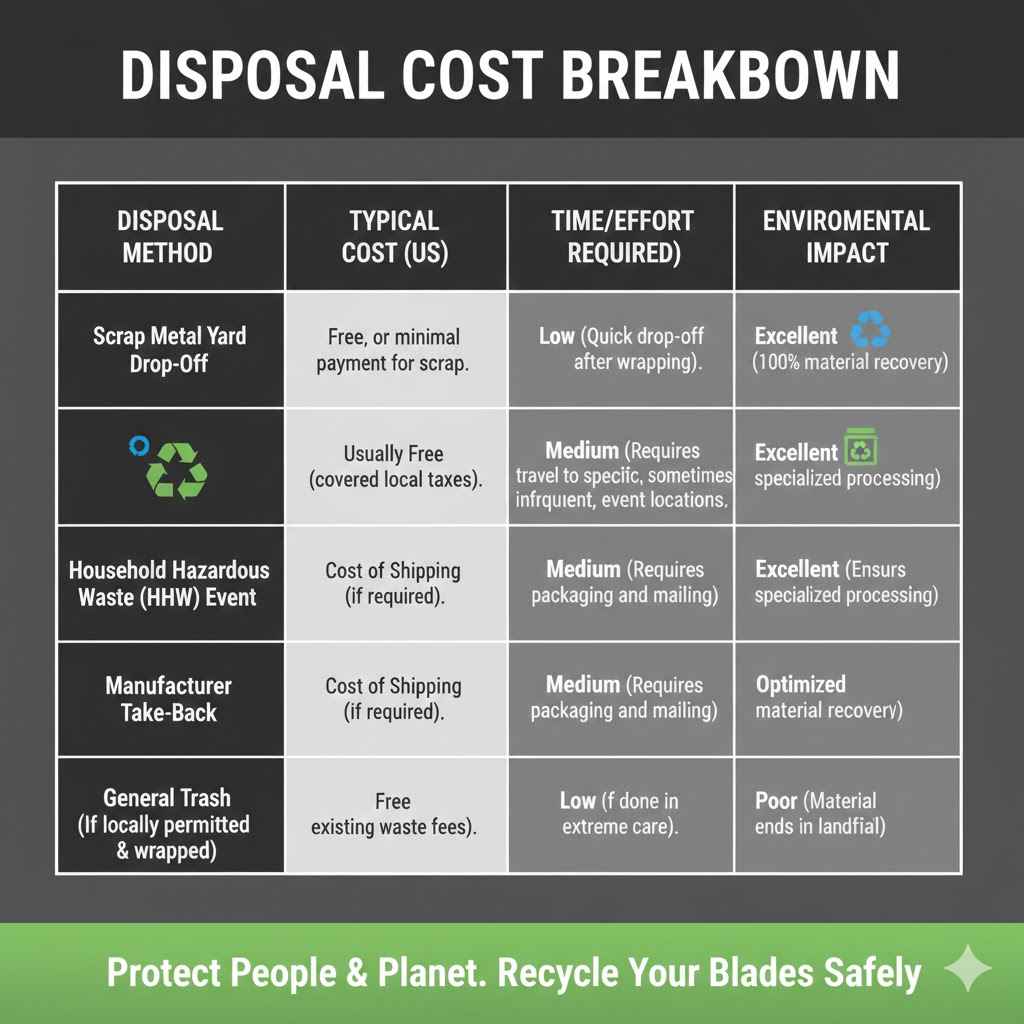
Disposal Cost Breakdown
Most responsible disposal methods for scrap metal are affordable, if not free. Here is a general breakdown of what you might expect regarding costs or potential returns.
| Disposal Method | Typical Cost (US) | Time/Effort Required | Environmental Impact |
|---|---|---|---|
| Scrap Metal Yard Drop-Off | Free, or minimal payment for scrap. | Low (Quick drop-off after wrapping). | Excellent (100% material recovery). |
| Household Hazardous Waste (HHW) Event | Usually Free (covered by local taxes). | Medium (Requires travel to specific, sometimes infrequent, event locations). | Excellent (Ensures specialized processing). |
| Manufacturer Take-Back | Cost of Shipping (if required). | Medium (Requires packaging and mailing). | Excellent (Optimized material recovery). |
| General Trash (If locally permitted & wrapped) | Free (included in existing waste fees). | Low (If done with extreme care). | Poor (Material ends up in landfill). |
Remember, the small investment of time in wrapping and drop-off is minimal compared to the cost of preventing a serious injury to a waste handler.
Frequently Asked Questions (FAQ)
Q1: Can I just throw small, broken blade pieces in the trash if they are wrapped in a towel?
While wrapping small pieces is better than tossing them loose, a towel is not puncture-proof enough. Always use thick, rigid material like layered corrugated cardboard or a hard plastic container. Even small pieces can cause injury if the wrapping fails during compaction.
Q2: Do recycling centers charge a fee for accepting old blades?
In almost all cases, no. Since blades are mostly steel, they are considered valuable ferrous scrap metal. Standard scrap yards usually accept them for free. In some instances where you have a significant amount of scrap, they may even pay you per pound, though individual saw blades weigh very little.
Q3: What should I do if my circular saw blade is rusted and pitted?
If the blade is heavily rusted and unusable for anything else, it should still be prepared and recycled. Rust does not disqualify it from metal recycling. Clean off any loose, flaky rust, wrap it securely as outlined above, and take it to your scrap metal yard.
Q4: Are carbide-tipped blades more difficult to recycle than steel blades?
Yes, slightly. Because carbide tips contain tungsten carbide, they require specialized high-heat processing to separate the different materials. Standard curbside recycling bins cannot handle them. However, most commercial scrap yards or specialized material recyclers (like those who process construction debris) are equipped to handle them, especially if they are bundled with other scrap metals.
Q5: Is it safe to try and grind the teeth off the blade before disposal?
No, this is generally unsafe and unnecessary. Attempting to grind the teeth off generates excessive heat, sparks, metal dust, and potentially dangerous shrapnel if the blade shatters during the grinding process. The safest method is simply to contain the sharp edges using robust cardboard and tape.
Q6: Can I include the original blade packaging when I recycle it?
If the original packaging is sturdy, hard plastic, you can place the blade inside that container, tape it shut, and use that as your secure wrapping. If the packaging is thin paper or flimsy plastic, you must remove the blade and use thick cardboard for containment before recycling the packaging separately.
Q7: Can I donate old saw blades?
You can donate old blades only if they are still functional and can be professionally sharpened and re-used. Check with local vocational schools, trade shops, or non-profit hardware stores that accept tool donations. However, if the blade is truly spent, broken, or heavily damaged, it must be recycled instead of donated.
Conclusion: Safe Disposal is Simple, Responsible Woodworking
Dealing with old, sharp tools might seem like a hassle, but when you break it down, safe disposal is just another part of being a responsible woodworker. By taking the few extra minutes required to properly clean, wrap, and label your retired circular saw blades, you are doing three great things: you are protecting the people who handle your waste, you are ensuring valuable metals get recycled, and you are keeping unnecessary material out of the landfill.
You now have the confidence and the clear steps to handle these sharp objects safely. Next time a blade gets dull, don’t worry about the disposal challenge—just grab your cardboard and duct tape, follow the checklist, and get that steel back into the recycling stream. Happy, safe woodworking!