

Creating beautiful wood project gift ideas is easier than you think. Start with essential tools like a hand saw, drill, and sander. Choose beginner-friendly wood such as pine or poplar. Simple projects like coasters, cutting boards, or picture frames make thoughtful, personalized gifts that anyone can create with basic skills and a little patience.
Have you ever wanted to give a gift that truly comes from the heart? Something unique, personal, and made with your own two hands? Store-bought gifts are fine, but a handmade wooden gift tells a story. It shows you cared enough to spend time creating something special. But the thought of woodworking can feel overwhelming. You might worry about needing a huge workshop or expensive tools. Many people feel this way and never get started. The good news is, you don’t need to be a master carpenter to create stunning gifts. This guide will show you exactly what you need to get started and give you simple, beautiful project ideas you can make today.
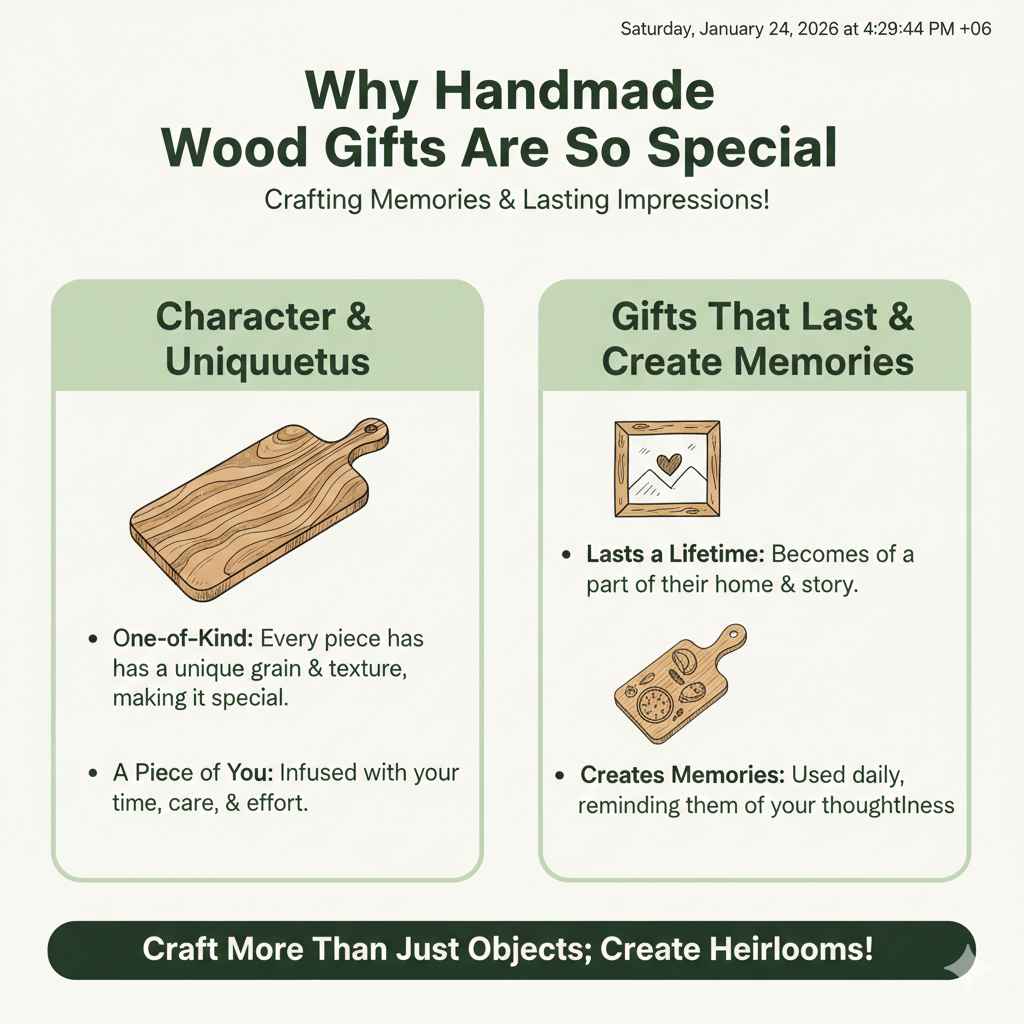
Why Handmade Wood Gifts Are So Special
There’s a unique warmth to a wooden gift. Unlike plastic or metal, wood has character. Every grain pattern is different, making each piece one-of-a-kind. When you make something yourself, you put a little bit of yourself into it. The person receiving it feels that care and effort.
Think about it. A simple wooden picture frame holding a cherished photo means so much more when you made the frame. A cutting board becomes a centerpiece in a friend’s kitchen, used every day and reminding them of you. These are gifts that last, create memories, and don’t get tossed aside. They become part of someone’s home and life. That’s the real magic of woodworking.
The Must-Have Essentials: Your Beginner Tool Kit
You don’t need a professional workshop to start making gifts. In fact, you can accomplish a huge range of projects with just a few core tools. Let’s break down the essentials into hand tools and power tools. My advice? Start with the hand tools, get comfortable, and then add power tools as you build your skills and confidence.
Core Hand Tools for Every Project
Hand tools are the foundation of woodworking. They teach you control, precision, and how to feel the wood. They are also much more affordable and quieter than their power-tool counterparts.
- Measuring Tape: Accuracy starts here. A good 16-foot or 25-foot tape measure is non-negotiable. Look for one with clear markings that are easy to read.
- Combination Square: This is your best friend for making sure your cuts are perfectly straight (90 degrees) and your angles are accurate (45 degrees). It’s a ruler and a square all in one.
- Hand Saw: A Japanese pull saw (like a Ryoba) is fantastic for beginners. It cuts on the pull stroke, giving you more control and a cleaner cut. It’s perfect for small to medium-sized projects.
- Clamps: You can never have too many clamps! They are like a third hand, holding your work steady while you cut, glue, or sand. Start with a couple of F-style clamps or bar clamps around 12 inches long.
- Chisel Set: Even a basic set of chisels (1/4″, 1/2″, 3/4″) is incredibly useful for cleaning up joints or carving small details. Make sure to also get a sharpening stone to keep them sharp.
- Wood Glue: A high-quality wood glue like Titebond II or III creates a bond that is stronger than the wood itself. It’s essential for joining pieces together permanently.
Beginner-Friendly Power Tools
Power tools speed up the process and open up new possibilities. Always prioritize safety when using them. Read the manual, wear safety glasses, and understand how the tool works before you turn it on. For excellent safety guidelines, check the OSHA Hand and Power Tools publication.
- Cordless Drill/Driver: This is probably the first power tool you should buy. It drills holes and drives screws effortlessly. A good 18-volt or 20-volt model will handle almost any task you throw at it.
- Random Orbital Sander: Sanding by hand is tiring. A random orbital sander makes getting a smooth, professional-looking finish incredibly fast and easy. It uses circular sanding pads and moves in a random pattern to avoid leaving swirl marks.
- Jigsaw: If you want to cut curves or intricate shapes, a jigsaw is the tool for the job. It’s versatile, relatively safe, and great for decorative projects.
- Miter Saw (Optional but amazing): While not strictly necessary for a beginner, a miter saw makes cutting perfect angles for picture frames or boxes incredibly simple and repeatable. If you plan on making many projects with angled cuts, this is a worthy investment.
Safety First: Your Workshop PPE
Your safety is the most important tool in your workshop. Never start a project without this basic Personal Protective Equipment (PPE).
- Safety Glasses: Protect your eyes from sawdust, wood chips, and debris. Wear them every single time you cut, sand, or drill.
- Hearing Protection: Power tools are loud. Foam earplugs or over-ear muffs will protect your hearing from long-term damage.
- Dust Mask: Breathing in fine sawdust is harmful to your lungs. A simple N95 mask is a must, especially when sanding.
Choosing the Right Wood for Your Gifts
Walking into a lumber store can be intimidating. So many types of wood! But for beginner gift projects, you can keep it simple. The best woods are easy to work with, affordable, and look great.
Beginner-Friendly Wood Species
Here are a few top choices that you can find at almost any home improvement store.
- Pine: This is a very common softwood. It’s inexpensive, lightweight, and very easy to cut and sand. It’s perfect for practicing and making rustic-style gifts. Its main drawback is that it dents easily.
- Poplar: Poplar is a hardwood, but it’s one of the softer ones, making it nearly as easy to work with as pine. It has a light color and a smooth, uniform grain. It takes paint beautifully, making it a great choice for colorful gifts.
- Oak: If you want a classic, strong wood, oak is a great choice. Red oak is very common and has a prominent, beautiful grain. It’s a bit harder to cut than pine but gives a very durable, high-end feel to your projects.
- Maple: Hard maple is a fantastic choice for projects that need to be durable and clean-looking, like cutting boards. It’s very hard, dense, and has a light, subtle grain. It can be more challenging to work with but provides a premium finish.
For more detail on wood types, this resource from Purdue University Extension is a great reference for identifying hardwoods.
Wood Characteristics at a Glance
This table can help you decide which wood is right for your next gift project.
| Wood Type | Cost | Ease of Working | Best For | Appearance |
|---|---|---|---|---|
| Pine | Low | Very Easy | Picture frames, small boxes, rustic decor | Light color with knots and strong grain |
| Poplar | Low-Medium | Easy | Painted toys, decorative shelves, phone stands | Light cream color, sometimes with green streaks |
| Red Oak | Medium | Moderate | Serving trays, bookends, sturdy frames | Light brown to pinkish-red with a strong grain |
| Maple | Medium-High | Difficult | Cutting boards, coasters, kitchen utensils | Creamy white with a subtle, smooth grain |
10 Simple & Stunning Wood Project Gift Ideas
Now for the fun part! Here are ten fantastic gift ideas that are perfect for beginners. Each one can be completed in a weekend or less with the basic tools we’ve discussed.
1. Classic Wooden Coasters
Everyone needs coasters! This is a perfect first project. You can make a set of four in just a couple of hours.
- Materials: One 1×4 board (pine or oak), sandpaper, wood finish (like mineral oil or polyurethane).
- Tools: Measuring tape, square, hand saw, sander.
- Steps:
- Measure and mark your 1×4 board into 3.5-inch squares. A 1×4 is actually 3.5 inches wide, so you just need to measure the length.
- Use your square to draw a straight line across the board at each mark.
- Carefully cut the squares with your hand saw. Take your time to stay on the line.
- Sand all sides of each coaster, starting with a medium-grit sandpaper (like 120) and finishing with a fine grit (220) for a super-smooth feel.
- Wipe off the dust and apply your chosen finish. If they’ll be used for hot mugs, a few coats of polyurethane is best.
2. A Simple Cutting Board
A small cutting board or cheese board is a beautiful and functional gift. Use a hardwood like maple or walnut for durability and a food-safe finish.
- Materials: One piece of 1×6 hardwood (maple is great), sandpaper, food-safe mineral oil.
- Tools: Saw, sander, drill (optional), clamps.
- Steps:
- Cut your board to the desired length. A good starting size is around 10-12 inches long.
- Use your sander to round over all the sharp edges and corners. A soft, rounded edge feels much better in the hand.
- If you want to add a handle, you can drill a 1-inch hole near one end.
- Sand the entire board until it’s perfectly smooth. Work your way up to at least 220-grit sandpaper.
- Wash the board with a damp cloth to raise the grain, let it dry, and then give it one final light sanding.
- Apply a generous coat of food-safe mineral oil. Let it soak in for 20 minutes, then wipe off the excess. Repeat this a few times.
3. Modern Phone/Tablet Stand
This is a super simple but incredibly useful gift for anyone’s desk or nightstand.
- Materials: A small block of wood (a 2×4 scrap works well), sandpaper, finish.
- Tools: Saw, measuring tape, chisel or hand saw for the slot.
- Steps:
- Cut your wood block to about 4 inches long.
- On the top face, measure and mark a slot about a half-inch wide. This is where the phone will sit.
- To create the slot, you can make two parallel cuts with your hand saw about 1 inch deep. Then use a small chisel to carefully remove the wood between the cuts.
- Cut a slight angle on the front face of the block so the phone will lean back. You can do this with your hand saw.
- Sand everything smooth and apply a finish like tung oil or wax.
4. Rustic Picture Frame
A handmade frame adds a personal touch to any photograph.
- Materials: One 1×3 pine board, wood glue, small nails or brads, finish.
- Tools: Miter saw or hand saw with a miter box, measuring tape, clamps.
- Steps:
- Decide on the size of your photo (e.g., 5×7).
- Cut four pieces from your 1×3 board with 45-degree angles on each end. The inside edge of the frame pieces should match the dimensions of your photo. A miter box is a huge help here for accurate angles.
- Apply wood glue to the angled ends of two pieces and join them to form a corner. Clamp them tightly and let the glue dry. Repeat for all four corners.
- For extra strength, you can add a small nail or brad to each corner.
- Sand the frame smooth and apply your chosen stain or paint.
5. Simple Wooden Box
A small box is perfect for holding jewelry, keys, or desk supplies. This project teaches basic box construction.
- Materials: One 1×4 board, one piece of 1/4-inch plywood for the bottom, wood glue, small nails.
- Tools: Saw, measuring tape, square, clamps.
- Steps:
- Cut four pieces from your 1×4 board for the sides. Make two pieces 6 inches long and two pieces 4 inches long.
- Glue and nail the pieces together to form a rectangle. Make sure the corners are square.
- Measure the outside dimensions of your box frame.
- Cut the 1/4-inch plywood to that exact size. This will be the bottom.
- Apply glue to the bottom edge of the box frame and place the plywood bottom on top. Secure it with a few small nails.
- Sand and finish as desired. You can leave it open or make a simple lid from another piece of wood.
6. Minimalist Candle Holders
These are elegant, modern, and incredibly easy to make from scrap wood.
- Materials: A block of wood (a 4×4 post scrap is perfect), sandpaper, drill, Forstner bit (sized to your candles).
- Tools: Saw, drill, Forstner bit, measuring tape.
- Steps:
- Cut the 4×4 block into cubes or varying heights (e.g., 3″, 5″, 7″).
- Find the center of the top of each block and mark it.
- Use a Forstner bit in your drill to bore a hole for the candle. This type of bit creates a clean, flat-bottomed hole. Don’t drill all the way through!
- Sand the blocks smooth.
- Finish with wax or oil. Be sure to never leave a burning candle unattended.
7. Wall-Mounted Bottle Opener
A fun and functional gift for any kitchen, bar, or patio.
- Materials: A small piece of wood (1×6 about 10 inches long), a wall-mount bottle opener hardware kit, screws, finish.
- Tools: Saw, drill, sander.
- Steps:
- Cut your board to the desired size.
- Sand it smooth and finish it with a durable, water-resistant finish like polyurethane.
- Attach the bottle opener hardware to the top portion of the board with screws.
- Drill two holes—one at the top and one at the bottom—for mounting it to the wall.
- Optional: Add a small magnet near the bottom to catch the bottle caps!
8. Elegant Serving Tray
This project looks impressive but is quite simple. It’s perfect for serving breakfast in bed or drinks to guests.
- Materials: One 1×10 board for the base, one 1×3 board for the sides, two cabinet handles, wood glue, screws.
- Tools: Saw, drill, sander, clamps.
- Steps:
- Cut the 1×10 base to your desired size (e.g., 12×18 inches).
- Cut the 1×3 board to create the four sides that will frame the base. Use 45-degree miter cuts for a clean look if you can, or simple butt joints if you prefer.
- Glue and clamp the side pieces to the edges of the base. Add a few small screws from the bottom for extra strength.
- Sand the entire tray thoroughly.
- Stain or paint the tray. Finish with a few coats of clear polyurethane for protection.
- Install the cabinet handles on the two shorter sides.
Project Difficulty and Time Estimate
To help you choose, here’s a quick comparison of the projects.
| Gift Idea | Difficulty Level | Estimated Time | Key Skill Learned |
|---|---|---|---|
| Wooden Coasters | Very Easy | 1-2 Hours | Accurate measuring and cutting |
| Simple Cutting Board | Easy | 2-3 Hours | Sanding and food-safe finishing |
| Phone/Tablet Stand | Easy | 1-2 Hours | Cutting slots/grooves |
| Rustic Picture Frame | Easy-Moderate | 3-4 Hours | Cutting angles (miters) |
| Simple Wooden Box | Moderate | 3-4 Hours | Basic box joinery |
Finishing Touches: From Handmade to Professional
The final steps of sanding and finishing are what separate a good project from a great one. Don’t rush this part!
The Magic of Sanding
Sanding seems tedious, but it’s the key to a flawless finish. Always sand with the grain of the wood, not against it. Start with a lower grit sandpaper (like 120) to remove saw marks and smooth the surface. Then, move to a higher grit (like 180 or 220) to make it silky smooth. For a truly professional feel, lightly wet the wood with a damp cloth after sanding with 220 grit. This is called “raising the grain.” Let it dry completely, and you’ll feel tiny wood fibers standing up. Knock them down with one last light sanding with 220 grit. Now your surface is ready for a perfect finish.
Choosing a Finish
- Oil Finishes (Mineral Oil, Tung Oil): These soak into the wood and give it a natural, low-sheen look and feel. Mineral oil is food-safe and perfect for cutting boards and utensils.
- Wax Finishes: Paste wax can be buffed to a soft, smooth sheen. It offers some protection and feels great to the touch. It’s great for decorative items.
- Film Finishes (Polyurethane, Lacquer): These create a hard, protective layer on top of the wood. Polyurethane is very durable and great for items that will see a lot of use, like trays or coasters.

Frequently Asked Questions (FAQ)
What is the absolute easiest wood gift to make?
A set of wooden coasters or a simple candle holder made from a block of wood are two of the easiest projects. They require minimal cutting and tools, making them perfect for your very first project.
Do I really need a power sander?
No, you don’t need one, but it will save you a tremendous amount of time and effort. Sanding by hand with a sanding block works perfectly well, it just takes more patience. A random orbital sander is often the best value power tool for a beginner.
What is a food-safe finish?
A food-safe finish is one that is non-toxic and safe for contact with food. The most common and easiest to apply is mineral oil, which you can buy at most pharmacies or grocery stores. Other options include pure tung oil and a mixture of beeswax and mineral oil (often called board butter).
How do I make my cuts straight with a hand saw?
The key is to use a guide. Clamp a combination square or a straight piece of wood along your cut line. This gives your saw a fence to ride against, helping you keep the cut perfectly straight. Also, let the saw do the work—don’t force it.
Can I use wood from pallets for gifts?
You can, but you must be very careful. Only use pallets stamped with “HT,” which means they were heat-treated, not chemically treated. Avoid any pallets that look stained or have been used to transport chemicals. Pallet wood requires a lot of prep work to make it usable.
What’s the best way to clean up wood glue squeeze-out?
The best way is to wipe it up with a damp cloth or a wet paper towel immediately after you clamp the pieces together. If the glue dries, you’ll have to scrape or sand it off, which is much more difficult.
How much does it cost to get started?
You can get a solid beginner’s kit of hand tools (saw, square, clamps, measuring tape) and safety gear for under $100. Adding a good cordless drill and sander might bring the total to around $200-$250, which is a great investment for countless future projects.
Your Woodworking Journey Begins Now
Giving a handmade gift is one of the most rewarding things you can do. It’s a way to show love, care, and creativity. Don’t be intimidated by the idea of woodworking. As you’ve seen, you can start small with just a few essential tools and create beautiful, functional items that your friends and family will cherish for years. The key is to pick a simple project, take your time, and enjoy the process of turning a plain piece of wood into something truly special. So head to the hardware store, grab a board, and make your first cut. You’ve got this.